Reform, Resilience & Rebirth: Berlin & The Age of Prussia
Date - Tuesday 23 February - Sunday 28 November 2027
Lecturer - Tom Abbott
Location - Berlin, Germany
Price - £2975 per person (2 sharing a room)
Liberalism with order might best describe Berlin. An accidental capital and a city of tensions captured by beauty, politics and cultural possibilities yet with deep shadows cast across much of the twentieth century. It is this undercurrent of reform, ruin, resilience and rebirth that makes Berlin such an alluring European capital.
Our kaleidoscopic week in November considers Berlin and Prussia through its engaging history and above all, the cultural triumphs of Berlin’s galleries, museums and the enlightened eighteenth century retreats of the Kings of Prussia.
-
Kaleidoscopic visit to Berlin engaging in its history from medieval to modern times
View the city’s great collections on Museum Island
A morning at one the Europe’s finest galleries – the Gemäldegalerie
Visit the summer retreats of the Prussian monarchs at Charlottenburg & Potsdam
Comfortable 5* hotel in the heart of Berlin
Liberalism with order might best describe Berlin. An accidental capital and a city of tensions mesmerised by beauty, politics and cultural possibilities yet with deep shadows cast across much of its twentieth century. It is this frisson of reform, ruin, resilience and rebirth that makes Berlin such an alluring European capital.
Itinerant merchants settled twin trading posts flanking the Spree River in the early thirteenth century merging into a single unity a century later as the centre of the March of Brandenburg. In 1415, Frederick I, Burgrave of Nuremburg from the House of Hohenzollern, was installed as their first elector of the margraviate ushering in five centuries of rule as Brandenburg electors, Prussian kings and German emperors until 1918. The Thirty Years War (1618 -1648) brought destruction the likes of which Berlin had never seen, thereafter stability and a series of enlightened electors closed the century, culminating in the self-elevation of Elector Friedrich III as the first King of Prussia in 1701.
Decorum, urban development, and the cultural and intellectual life of Berlin flourished in the eighteenth century, accented by the long rule of Frederich the Great (1740 – 1786), who promoted social reforms and a grand architectural plan for the city, fashioning Berlin into a cultural capital for Brandenburg and Prussia. The Prussian prime minister Otto von Bismark’s ambitions were finally realised in 1871, who, through diplomacy and war, forged a unified Germany with Prussia at its helm and Berlin its prow. As the imperial capital, the next fifty years eclipsed the city as never before, becoming the nation’s largest. Industry and culture, marching forward, making the ritzy city a modern cultural metropolis until the rise of Hitler and the shattering of Berlin.
After 1945, a divided city in a divided nation coexisted straddling two German states with a wall going up and miraculously coming down, without a single shot being fired, in 1989. Post-reunification, Berlin is once again the nation’s capital – young, urbane, progressive, cultured and welcoming to newcomers where we and they are all Berliners.
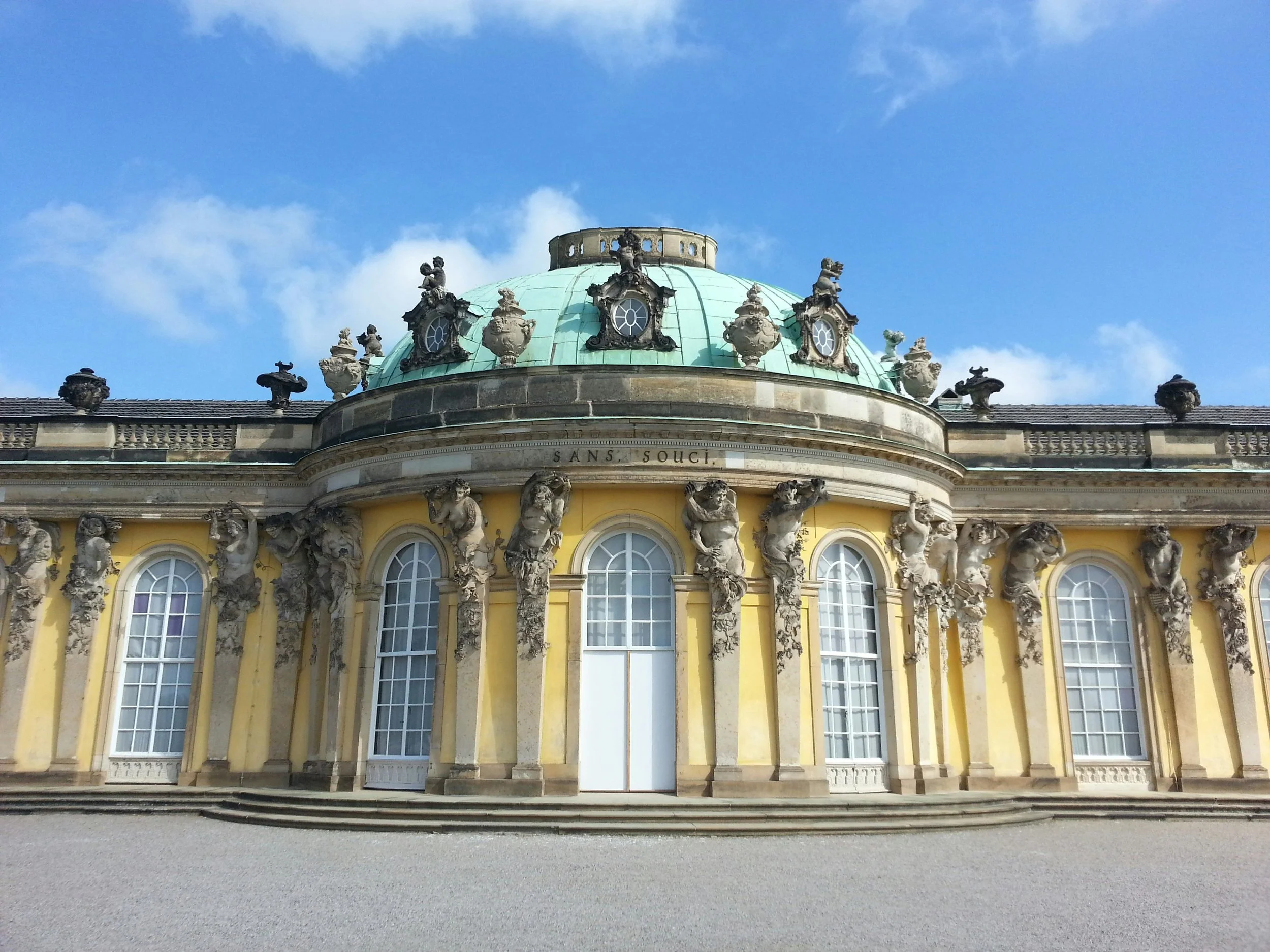
Our visit considers both Berlin’s engaging and, at times, inglorious history, yet focuses on its marvellous collections of art and antiquities, many of which are displayed, trophy-like on Museum Island. We spend a morning at the Gemäldegalerie and travel to the former palaces and villas of the Kings of Prussia at Charlottenburg and at Potsdam. Here, Frederick the Great erected a dreamy summer retreat which miraculously survived World War II and in 1945, where the framework of a post-war Germany was planned by its victors.
We will be led by Berlin resident and lecturer Tom Abbott. We stay comfortably at the 5* Westin Grand Berlin. Located at Boulevard Unter den Linden equidistant between Germany’s political heart around Brandenburg Gate and Berlin’s cultural heart at Museum Island, much of what we will see is located within reasonable walking distance. A bar, restaurant and spa are just some of its facilities with plenty of shops, cafes and restaurants within easy reach of our hotel.
-
Day 1: Tuesday 23 November – We fly mid-morning from London’s Heathrow to Berlin Brandenburg, arriving early afternoon. We transfer by coach to the city’s western districts to visit the Kaiser Wilhelm Memorial Church. Albeit a restored ruin, the late nineteenth century church is both a symbol of the bombing of the city in late 1943 and Berlin’s post-war rebuilding. The interior is resplendent with remarkable stained-glass inlays. We continue to Checkpoint Charlie to consider one of the flashpoints of the Cold War where, between 1961 and 1990, diplomats and foreigners used the allied gateway between west and east Berlin. After check-in at our hotel, an early evening group dinner takes place in an excellent nearby restaurant. Wine, water and coffee/tea are included with all group lunches and dinners.
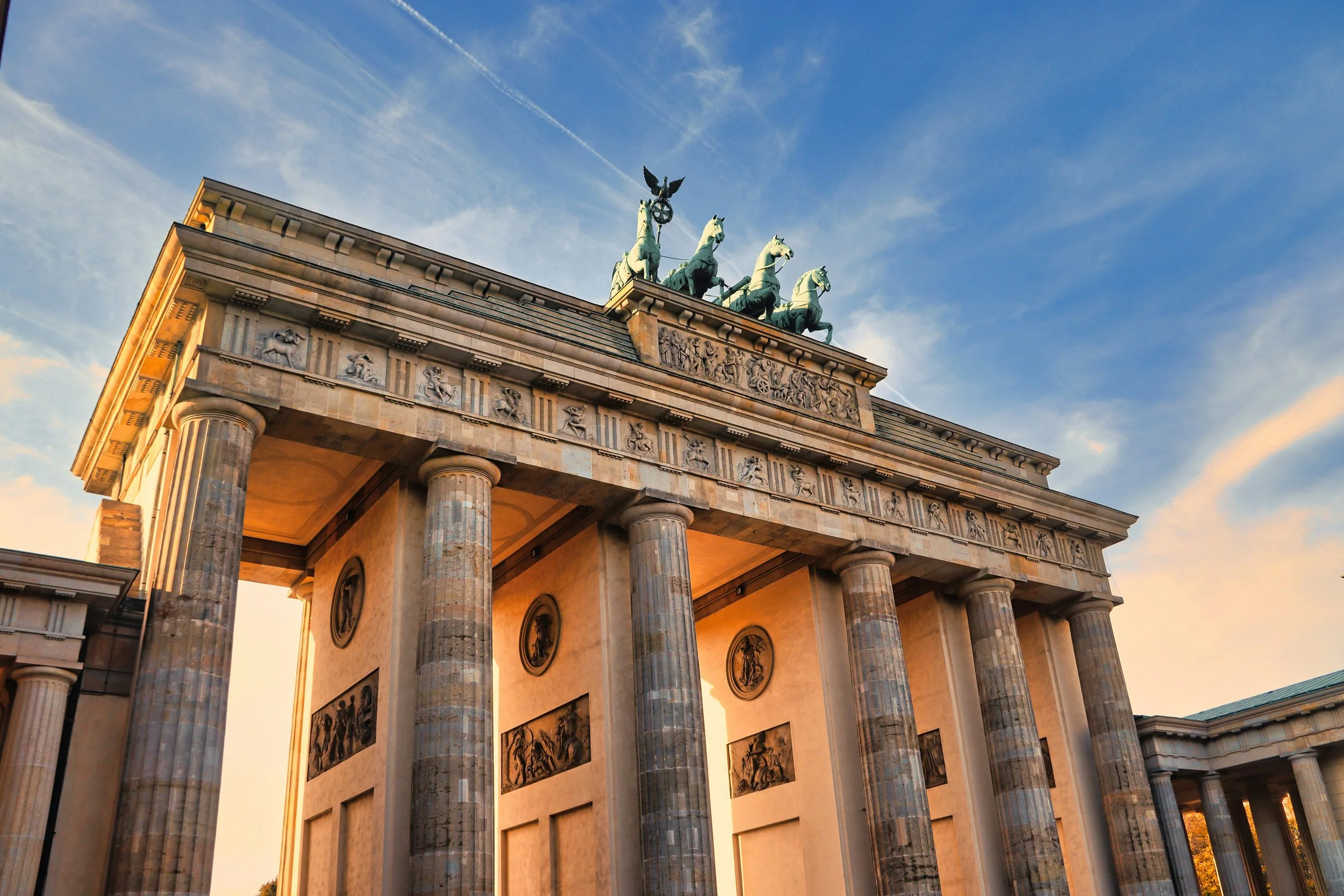
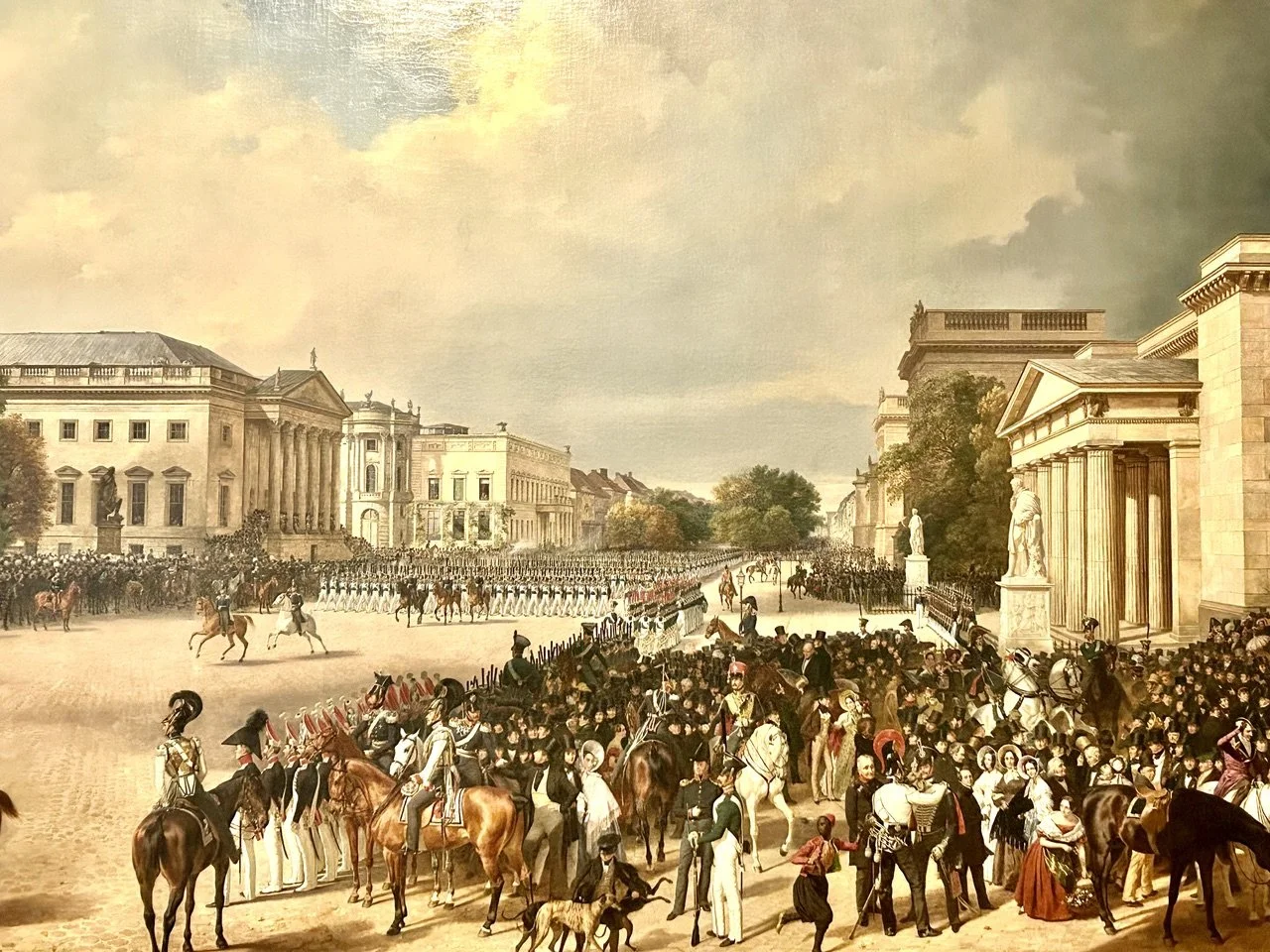
Day 2: Wednesday 24 November – We walk towards Museum Island via Gendarmenmarkt, one of Berlin’s prettiest and ritziest squares, pausing at Bebelplatz. Once the heart of Frederick the Great’s cultural vision for Berlin, in May 1933 it was the infamous setting of the first public book burning in Nazi Germany. After a coffee break, we visit the first of the city’s museums on Spree Island. The Neues Museum houses an impressive collection of Egyptian art and antiquities, our highlight of course being an ‘audience’ with Queen Nefertiti, one of the finest busts from all antiquity. We shall have a group lunch nearby after which in the afternoon, we plan to visit the soon-to-reopen North Wing of the Pergamon Museum - a feast of antiquities from Greece, Rome the Near East. We end our first full day at the Brandenburg Gate, the triumphal gate erected by the Friedrich Wilhelm II of Prussia in 1791, a symbol of both German Reunification and the modern state. The remainder of the afternoon and evening will be free.
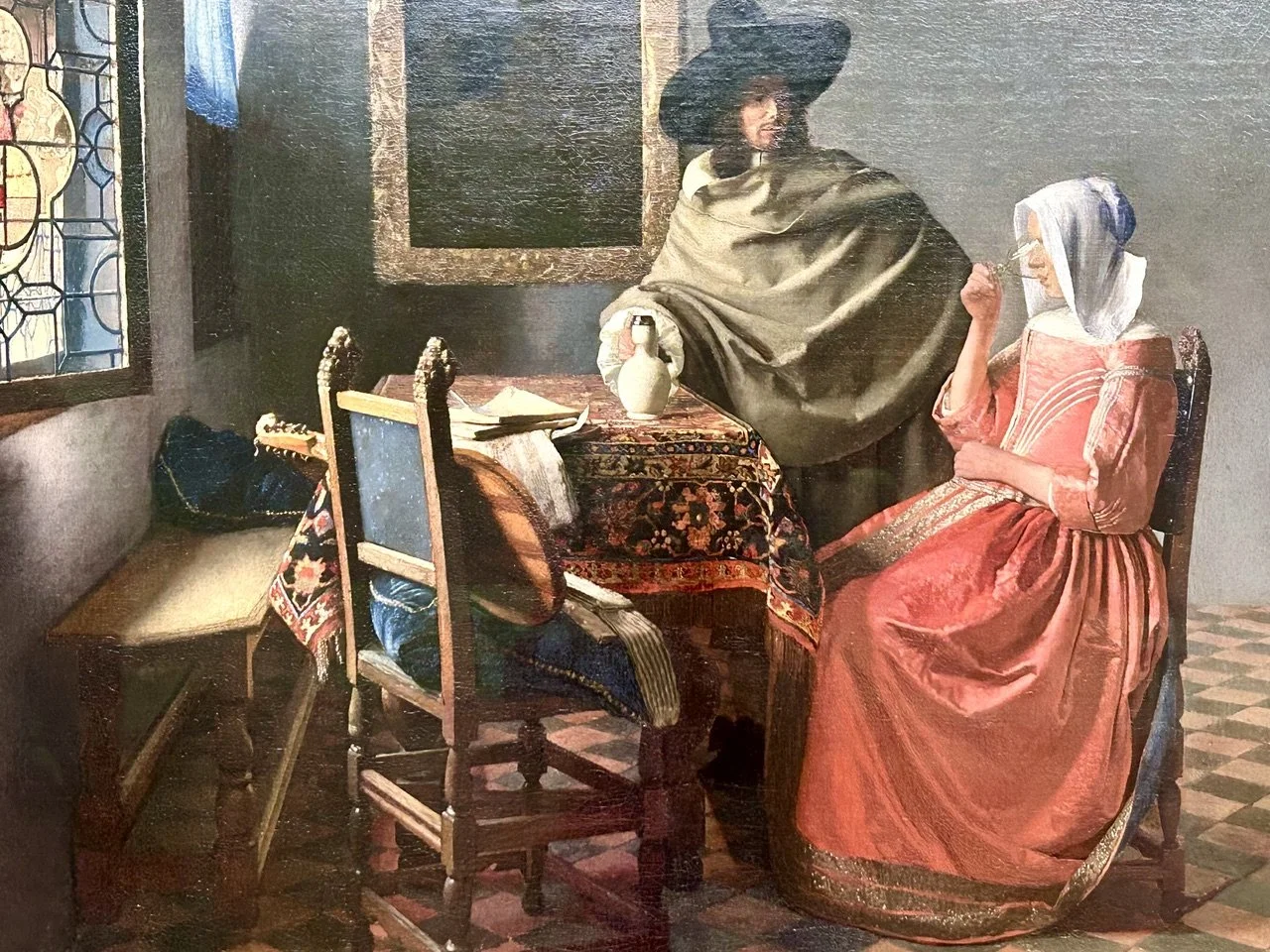
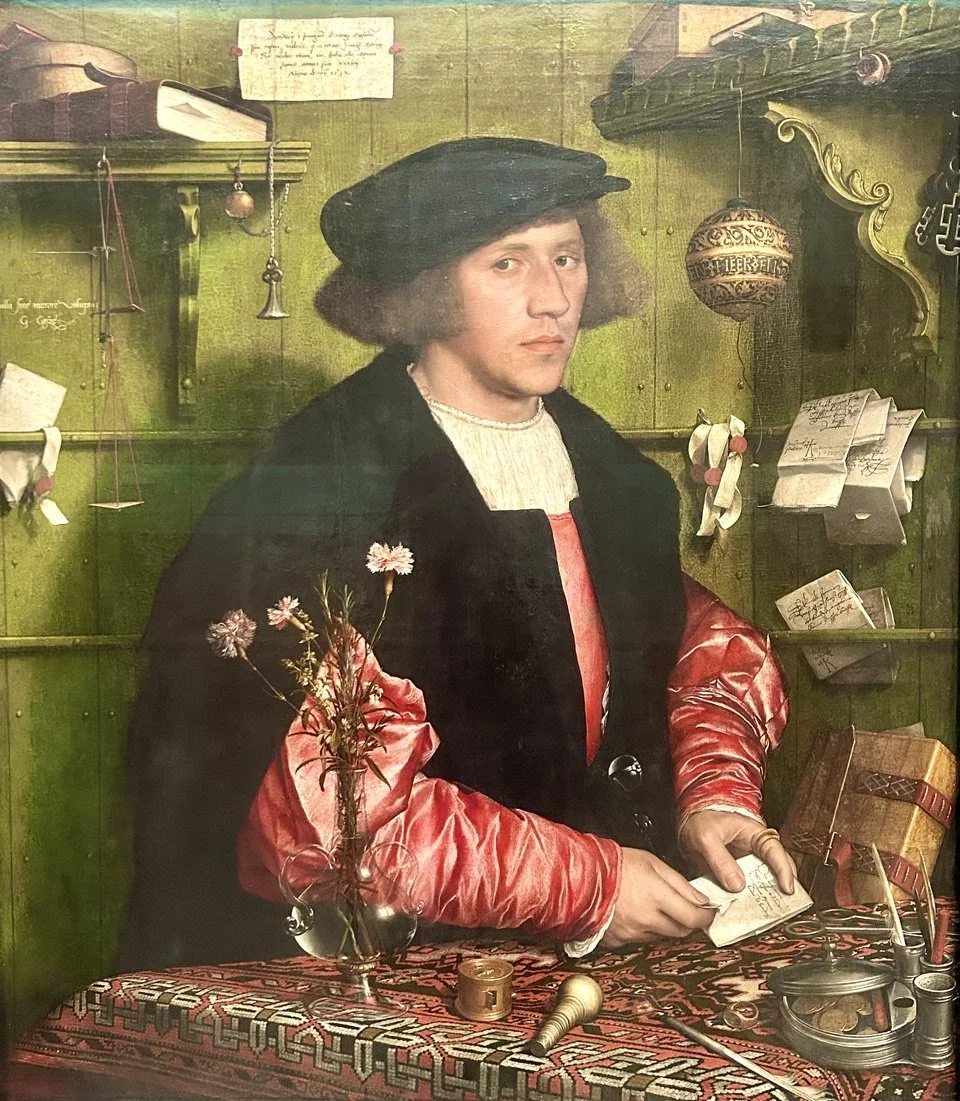
Day 3: Thursday 25 November – Our half day of activities takes place at the Gemäldegalerie beyond Potsdamer Platz close to Tiergarten Park. One of Europe’s great art galleries is awash in Old Master paintings from most European schools with highlights by Holbein, Dürer, Rembrandt, Vermeer, Botticelli and Titian to name a few. Our visit will be divided by a coffee break on site and at the end of the morning, we return to the centre of the city via the Holocaust Memorial. Lunch (not included) and the remainder of the day will be free for private explorations of the city.
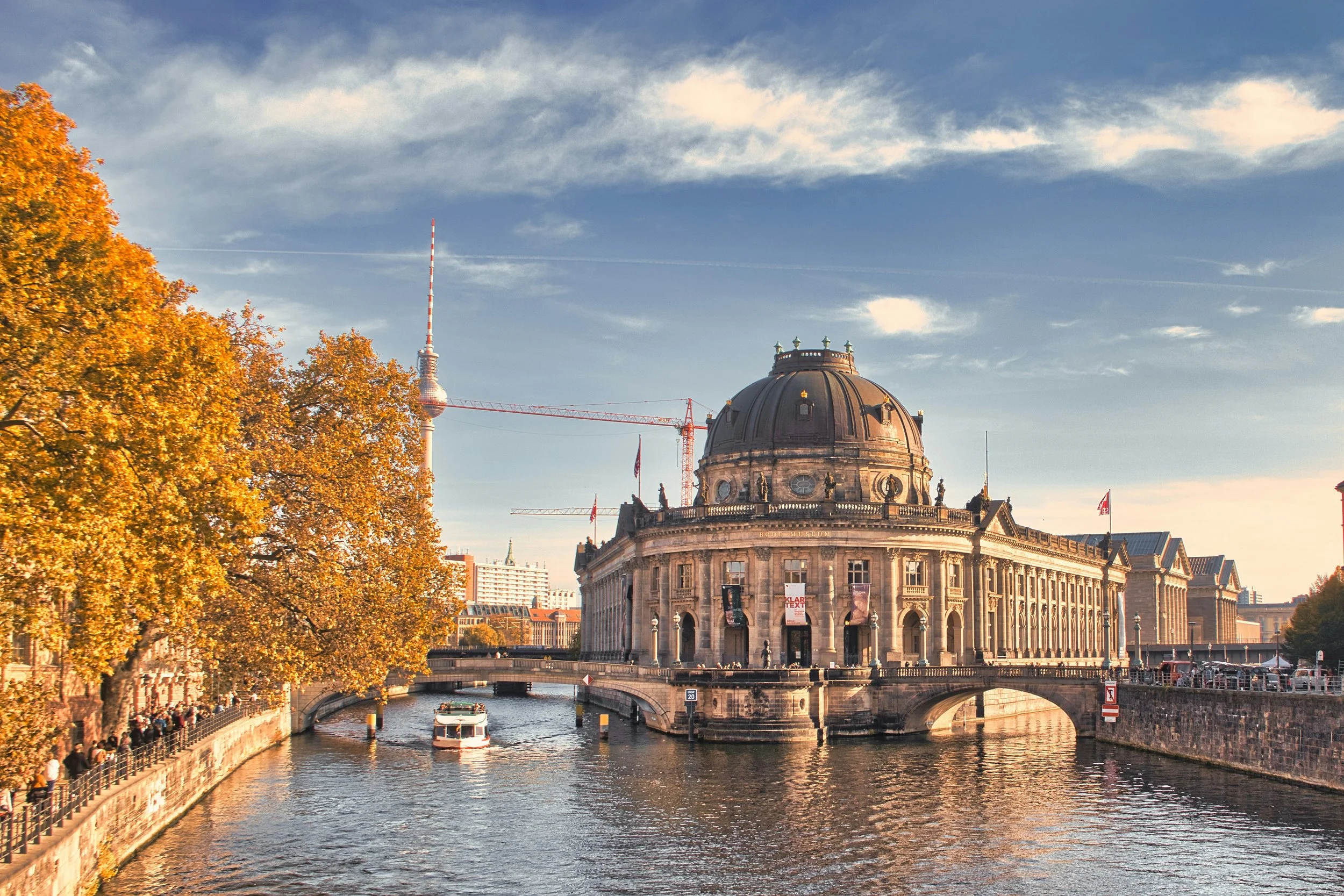
Day 4: Friday 26 November – This morning we walk via the impressive Humbolt Forum - the newly restored former Prussian Royal Palace - to the Nikolai Quarter the medieval district of Berlin reconstructed after the war by the East German government. We return to the north part of Museum Island to visit the Alte National Galerie. Nineteenth century French and, above all, German Romantic, Neoclassical and Impressionist art are displayed in a very fine neo-Greek Temple building. We pause for a group lunch nearby and conclude at the Bode Museum. It stands, basilica-like, at the prow of the island, and is a statement of the cultural ambitions of the German emperors at the beginning of the twentieth century. Today, its collections are varied with European sculpture, the Prussian Baroque and Byzantine Art forming much of this eclectic and interesting collection filled with gems! The evening will be free.
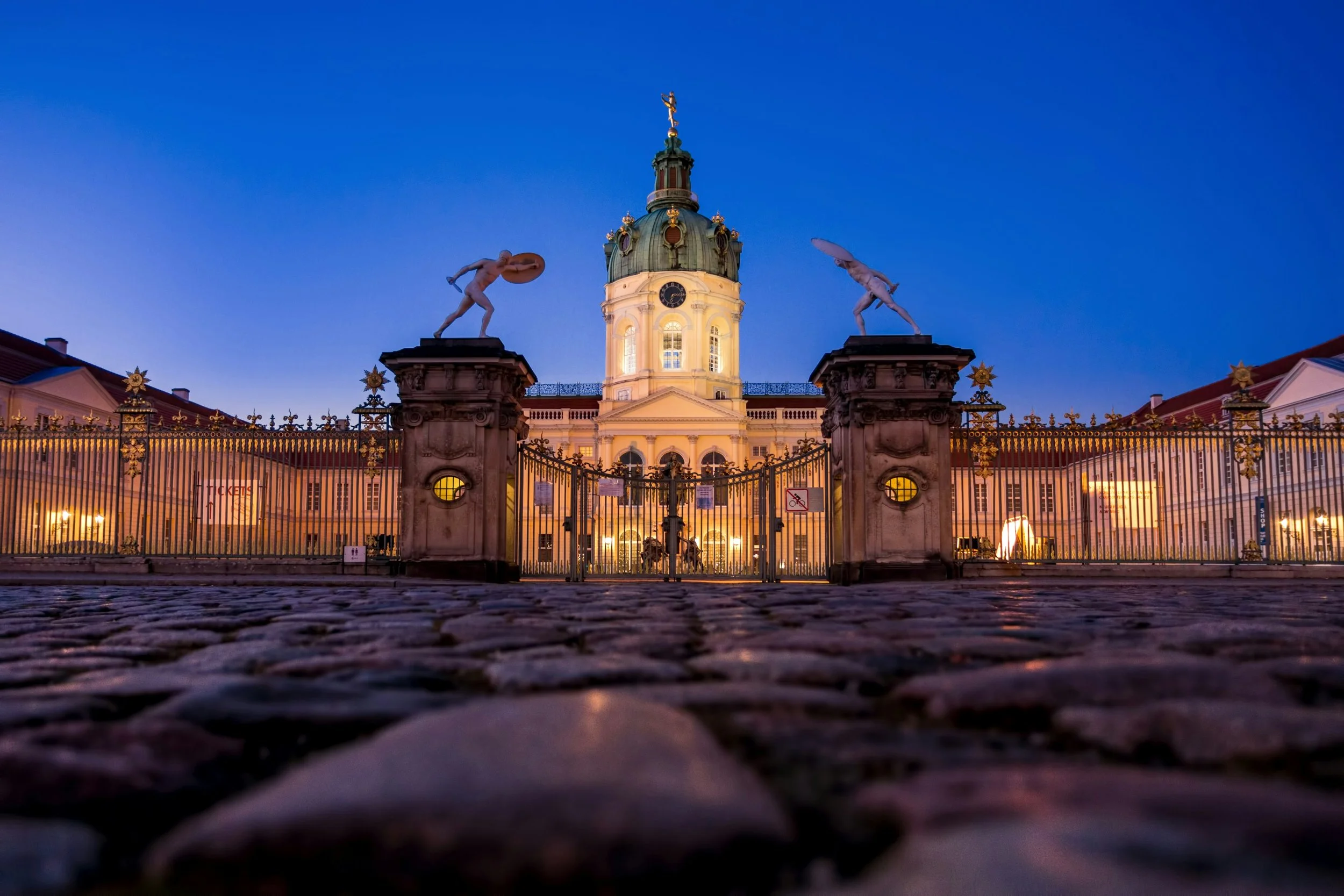
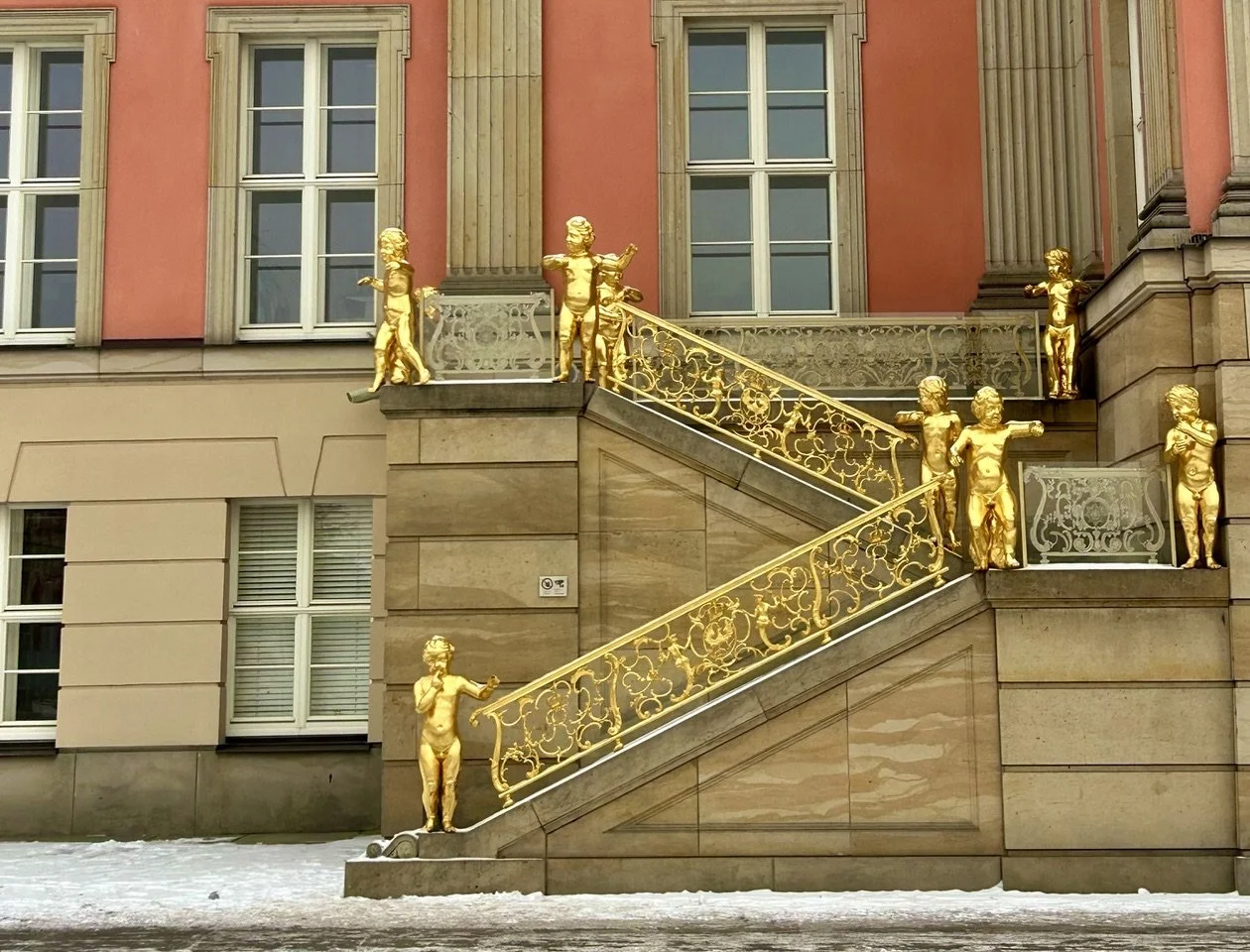
Day 5: Saturday 27 November – Our weekend of visits takes place to the west and south of the city centre. We drive to Charlottenburg to visit the palace commissioned by Sophie Charlotte, the wife of the Elector Friedrich who upgraded the palace after his own elevation as the first King of Prussia in 1701. We shall visit the ‘Old Wing’ and Frederick the Great’s mid-century ‘New Wing’, both embellished with extravagant baroque and rococo interiors, the latter of which displays some very fine eighteenth century French paintings. After a coffee break, we conclude our morning at the nearby Brohan Museum, a smaller house collection of art nouveau, art deco and functionalist furniture and objects. We return to the centre after which lunch (not included) and the afternoon will be free. In the early evening, we walk to the Reichstag, the iconic neo-renaissance building once home to the German Imperial and Weimar Republican legislature. Only post reunification was it fully re-designed by Norman Foster becoming the home of the German government and crowned by a spectacular glass cupola where we shall dine as a group on our final night.
Day 6: Sunday 28 November – On our final day we travel south-west of Berlin to Potsdam where we shall spend the morning at the Sansoucci Palace. The Age-of-Enlightenment summer retreat was dreamed up by Frederick the Great, the single floor villa striding atop a prominent position overlooking Potsdam and garlanded by terraces, gardens and architectural follies. We pause for our final group lunch in the sophisticated historic centre before continuing to Berlin Brandenburg airport and our early evening flight to London’s Heathrow airport.
-
PRACTICALITIES
Price £2975 per person Without Flights £2775pp Deposit £450pp Single Supplement £475 (Double for Sole Use)
Hotels 5 nights including breakfast at 5* Westin Grand Berlin Couples in a King bedded Garden Deluxe Room/DSU. Twin bedded/2 persons in a Standard Deluxe room
Flights British Airways
Outward: BA992 Depart London Heathrow Terminal 5 1115, arrive Berlin Brandenburg 1410
Return: BA987 Depart Berlin Brandenburg 1855, arrive London Heathrow Terminal 5 1955
Price includes 2 dinners and 3 lunches with wine, water & coffee, all local transfers, entry fees, City Tax & gratuities, services of Tom Abbott and our tour manager Marion Van Hoecke.
Not included Travel to/from London Heathrow, 3 dinners & 3 lunches
Please note our tours generally involve a significant amount of standing and walking, sometimes across uneven ground, or over cobbled streets, or up and down steps and inclines. We do not have an upper age limit for participants, but we require you to have a level of fitness which does not affect other participants' enjoyment of the tour. Please also note that many palaces, gardens, villas, museums and galleries have limited seating and perhaps do not have lifts. You should be able to walk at a reasonable pace and/or stand for at least twenty minutes without aid or requiring a rest. If you are in any doubt, please do contact us for advice on the tour’s suitability for you.