

Our destinations
Italy
Italy is the beating, perhaps racing pulse of Europe’s past. Its artistic and cultural heritage is unmatched and undimmed. From its cool Alpine reaches, the sensual brilliance of the south, its inviting lakes and coastline, extraordinary art cities and its rural regions: Italy is as varied as it is enticing.
Italy’s complex past has consisted of many systems of government. The ebbs and flows of centuries of empire, foreign occupiers, small city states, larger Papal ones, kingdoms, dukedoms and independent republics – all have been a gift of artistic and cultural patronage unparalleled anywhere else. A peninsula as old as the ages, Italy is a relatively new political entity united as a kingdom one hundred and fifty years ago under the House of Savoy, and a republic in 1946. The Vatican City State maintains its sovereign mark in the capital itself. All roads did indeed lead to Rome. Its imprint, and that of Italy, is felt far beyond its borders in the architecture of the great estates of Europe’s aristocracy and the wealth of its art collections in the world’s metropoli. The influence of its cuisine, its way of life and its clement weather have all endeared Italy to all that visit it.
-
The Italian Alps frame the Italian lakes, garlanded by Edenic villas and gardens at Lakes Garda, Iseo, Maggiore, Como and Lugano just into Switzerland. More rural delights in some of the most Arcadian landscapes grace the entire peninsula from Palladio’s classical revolution in architecture in the Veneto to the renaissance villas and gardens surrounding the Tuscan towns of Florence, Lucca and Siena. Papal and princely magnificence has long surrounded Rome from the water spectacles at Tivoli to the modern garden paradise of Ninfa. Rome’s legacy is history itself, her historical journey can be seen everywhere from the ruins of its empire to the flourishing of the renaissance and Baroque periods in art, sculpture and architecture. Her road network was such that the cultural imprint of Rome can still be seen from north to south. The unvisited joys of Friuli-Venezia-Giulia and Piedmont. The visual surprises of Lombardy, Umbria and Emilia-Romagna – all emblazoned with a cuisine and tradition in wine-making that matches their art and architecture. From the smallest village hall to the largest gilded opera house, Italy’s musical heritage is the history of modern Italy itself. The memories of the opening notes of a Verdi aria on a warm evening in Verona’s amphitheatre or the prestige of Milan’s La Scala and Venice’s La Fenice linger on following any visit. Venice is an old friend who, like Rome, one returns to again and again, its multiple facets and layers unravelling in child-like excitement around its canals. Echoes of the Ancient Roman world are spectacularly revealed under the shadow of Mount Vesuvius at the Bay of Naples.
The discoveries of Pompei, Herculaneum and Paestum not only revealed the world of the ancients in such domestic detail but also invited the traveller to consider the south of Italy when it was a part of greater Greece, or Magna Graeca. The colour and sensual brilliance in Sicily is not only reserved for the Greeks and their temples, but also in later periods with the arrival of the Normans and their mosaiced churches, and the theatrical Baroque exuberance of towns like Siracusa and Noto. That same colour and variety is found in Puglia and in Italy’s most westerly region, Sardinia.


Of the world’s greatest intellectual, artistic and cultural achievements, France can mark many as her own. Its enlightened approach to life has driven excellence in the arts, fashion, an unrivalled contribution to the world’s cuisine and even systems of government born of the Declaration of the Rights of Man. France is at its very essence, the joie de vivre.
From the English Channel to the Mediterranean, from the Atlantic Ocean to the Rhine and from the Pyrenees to the Alps, France’s historical tapestry is deeply woven into the very fabric of Europe. Celtic Gauls populated roughly the same area as modern-day France who were slowly conquered and divided by the Romans. After Rome, Germanic kingdoms and the Celtic Britons came with Clovis later becoming the first Christian king of all Franks. Small kingdoms and alliances oscillated until Charlemagne reunited Frankish kingdoms building a vast central European empire, and becoming the first Holy Roman Emperor. Wars with its neighbours and dynastic inheritance slowly united France. Under the House of Valois, France experienced a spectacular cultural renaissance consolidated by increasing absolute royal power under the Bourbons which was ultimately unsustainable by 1789. Revolution, Napoleon and today the post-de Gaulle republic anchors France still to the great affairs of Europe whose ripples echo beyond its long borders and overseas territories.
France
-
Paris is the physical declaration of the ‘grand idea’ – a statement of civic and intellectual intent. Great spaces, monumental architecture, sophisticated palaces and some of the world’s greatest art collections are but some of its attractions from the unequalled display at the Louvre to the showcase of French painting at the Musee D’Orsay. The ambition of scale and decoration makes Versailles perhaps the most famous palace in the world. Paris itself is garlanded with the chateaux and maisons of the cardinals, diplomats and court movers of France who worked for Dauphine or king. Many of these estates celebrate the achievements of the French Renaissance such as in the Loire Valley and at Fontainebleau. The glittering ambition of seventeenth century Baroque France is also celebrated at the chateaux and gardens at Vaux de Vicomte. Other landscapes and gardens along the Siene Valley all the way up to the cliffs at Dieppe inspired the Impressionists meandering between the Gothic splendours of the great cathedrals such as at Rouen. Monet’s artistic home at Giverny is the natural partner to Latour-Marliac near Bordeaux where the artist bought his water lilies. Gardens great and small, ancient and modern find in France the perfect balance between variety of planting, location and light, in short, the picturesque. Topiary masterpieces at Le Manoir D’Eryignac and Marqueyssac are complimented by contemporary designs at Jardins de l’Imaginaire located between the Rivers Vezere and Dordogne in Aquitaine beautifully located in some of the most stunning scenery France has to offer. Vistas are punctuated by astonishing discoveries of our shared prehistoric past such as the painted animals and human figures discovered at Lascaux. Beyond the larger cities of Lille, Tours, Orleans, Lyon, Bordeaux and Marseilles – France’s oldest city – lies the colours of the Mediterranean coast. Provence is more than the weighted history of the fourteenth century exile of the Papacy at Aix en Provence. Fertile slopes of olive groves, lavender fields and superlative Mediterranean light attracted the Impressionists and more recent artists. Renoir at Cagnes, Matisse at Vence and Picasso at Mougins all made Provence and the Cote D’Azur their artistic homes. Art collections and gardens of delight pepper the hills beyond the glitz and glamour at Cannes and the princely enclave at Monaco.
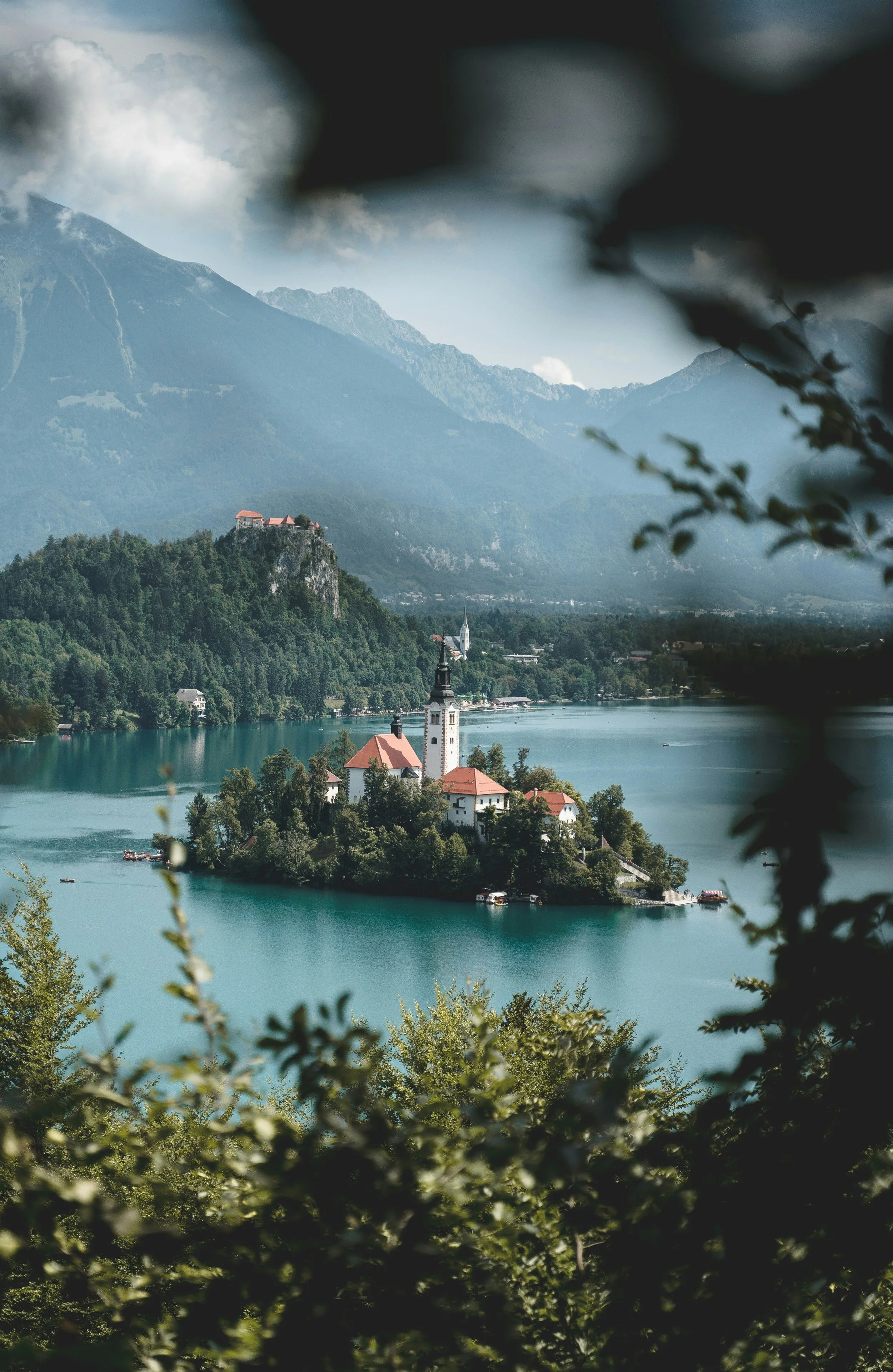
Slovenia is a young republic located at the Western edge of central Europe. It is a geographical, historical and cultural crossroads amidst the Germanic, Slavic and Italic cultures that surround this green unspoilt land rich in topographical and cultural diversity. It is also one of the most welcoming of all Europe’s nations.
Following the absorption of Illyrian and Celtic tribes, Ancient Rome organised present-day Slovenia into two provinces both of which were a part of modern-day Italy and Austria to the north. Trade and military routes were important arteries which were subject to repeated incursions by Huns and Germanic tribes seeking to enter into Roman Italy. The first Slavs arrived in the early medieval period with rival kingdoms and empires including Franks, Bavarians and Hungarians seeking to take control. Despite Turkish raids from inland and Venetian ambitions from the Adriatic, the Germanisation of Slovene lands was complete when the Habsburgs took control in the fourteenth century which ended when Austro-Hungarian influence and dominion over Slovenia collapsed at the end of World War 1. Nationalism and cultural identity began during the Reformation. Self-determination was only half-realised in the twentieth century when Slovenia was a constituent member of two artificially-constructed ‘Lands of the Southern Slavs’. Only when the second Yugoslavia collapsed in 1991 did Slovenia become truly independent and a democracy which continues to flourish.
Slovenia
-
Much of northern Slovenia is mountainous and peppered by lakes, as the Dinaric Alps descend eastwards into the Pannonian Plain close to the border with Hungary. One such lake is Slovenia’s finest, Lake Bled, whose stunning Alpine scenery transformed the lake into a popular Habsburg resort in both the summer and winter. Ljubljana is the national capital. The economic and cultural centre of the nation, this small city was founded as a Roman border town and is culturally rich with an imposing castle, a gentle river running through it and some of the most aesthetically- pleasing urban architecture of the Post-Modern era designed and built by local architect Joze Plecnik. Baroque palaces and a number of Catholic churches, many built by itinerant Italian artists, give this most handsome town a distinctly Italian and Mitteleurope feel. Slovenia’s national museums are complimented by a first-rate picture gallery showcasing Slovene artists working from Vienna, to Prague and Munich across the nineteenth and twentieth centuries. The gentle, verdant, valley landscapes of the centre of the country are highlighted by the eastern towns of Maribor and above all Ptuj, one of the handsome medieval towns in Slovenia. Located on the Drava River close to the Croatian and Hungarian borders, it has survived Turkish raids and rival ambitions from its neighbours as one of Slovenia’s loveliest places with Baroque churches and a castle citadel once owned by the Leslies of Scotland. A decidedly Mediterranean climate graces the south of Slovenia towards the borders with nearby Istrian peninsula in Croatia, but above all, Italy to the west. Resort towns along the thin slither of Slovenia’s sovereign coastline such as Piran are wholly Venetian in appearance with fine renaissance architecture, charming piazzas and long coastal promenades. The hybrid nature of Slovenia’s historical and cultural journey is reflected in the varied gastronomy and excellent wine of a nation at home with its own Slovene, Austrian, Hungarian and Italian influences. Above all, Slovenia is a young nation flourishing as never before beyond its quarter century as an independent republic in the heart of Europe.

Croatia
Located along the eastern Adriatic seaboard straddling western and central Europe, Croatia has deep historic roots, both emerging from and embedded in competing cultural identities. Its cultural heritage reflects a rich blend of Illyrian, Roman, Byzantine, Slavic, Venetian and Austrian influences and traditions. Illyrian tribesman held out until maritime Greeks took charge, followed by the Romans who created the province of Dalmatia. The province became imperial equipped with a sophisticated road network and significant urban development, establishing many coastal settlements along the Adriatic and the islands garlanding it. When the eastern half of the Roman Empire metamorphosed into ‘Byzantium’, a continuous oscillation of power between constantly warring forces developed as Christianity began to spread. Indeed, this came to dominate the complex Slavic migrations of the medieval period during which the Croats arrived and established their own kingdom in the tenth century. Slavic, or the Glagolitic alphabet, played a major role in disseminating literacy, education and the seeds of Croatian identity. Ottoman expansion into the Balkans in the fourteenth century brought seismic change to the Croatian interior juxtaposed with the emergence of Venice as a trading empire on its coastline which in turn stimulated not only sporadic conflict between the two but also demand for naval manpower: Venice built its mother city with Istrian stone and wood yet filled its galleys with Dalmatians. As a consequence, Venice absorbed and transformed many coastal towns into ‘mini-Venices’ with ports and naval bases whilst Ragusa (Dubrovnik) became an independent and powerful maritime republic.
Competing Ottoman, Venetian and Habsburg expansion unwittingly carried Croatia and the wider Balkans towards the ultimate dream of a ‘land of the Southern Slavs’ (Yugoslavia) with the nineteenth century acting as a catalyst for a national awakening inspired by the nationalist movements for independence sweeping the world at the time. After the fall of Venice in 1797 and the Austro-Hungarian Empire just over a century later, two short-lived kingdoms and a socialist federal republic carried the artificial construct of Yugoslavia to its conclusion in 1991, Yugoslavia succumbing to eventual chaos on the crescendo of socio-political tensions and ultimately civil war. The quagmire of political failure fed the tragedy of break-up within Yugoslavia, yet a peaceful and independent Croatia emerged, a nation which, in 2013, found its place as the newest member of the European Union.
-
Many of Croatia’s most evocative towns are located on the Adriatic; their architecture a reflection of Venice executed by many a Slavic master mason. They can be seen on the Istrian Peninsula to the north bordering Slovenia and minutes from the city of Trieste. Rovinj, Porec and Pula are all ‘mini-Venices’, the latter of which is dominated by its very well-intact Roman amphitheatre. Zadar, the old Byzantine capital of Dalmatia, mirrors its Venetian mother city with churches and buildings of innate charm whilst just under one thousand islands protect the coast from north to south including Hvar and Korcula. The Emperor Diocletian came from Dalmatia and after retirement - rare for a Roman emperor – he settled in a fortified palace, a sort of grandee retirement home. Much of his palace can be seen in Split elements of which would later inspire Robert Adam in the eighteenth century. As the Mediterranean climate improves further south (reflected in Croatia’s excellent food and wine), Dubrovnik forms a stupendous coda to coastal Dalmatia, fiercely independent and imposing and summed up by its muscular and impregnatable walls.