The Courtier & The Ideal City: Urbino, Ascoli Piceno & The Marches
Date - Monday 20 - Sunday 26 September 2027
Lecturers - Tom Duncan & James Hill
Location - Ascoli Piceno & Urbino, Italy
Price - £3470 per person (based on two sharing)
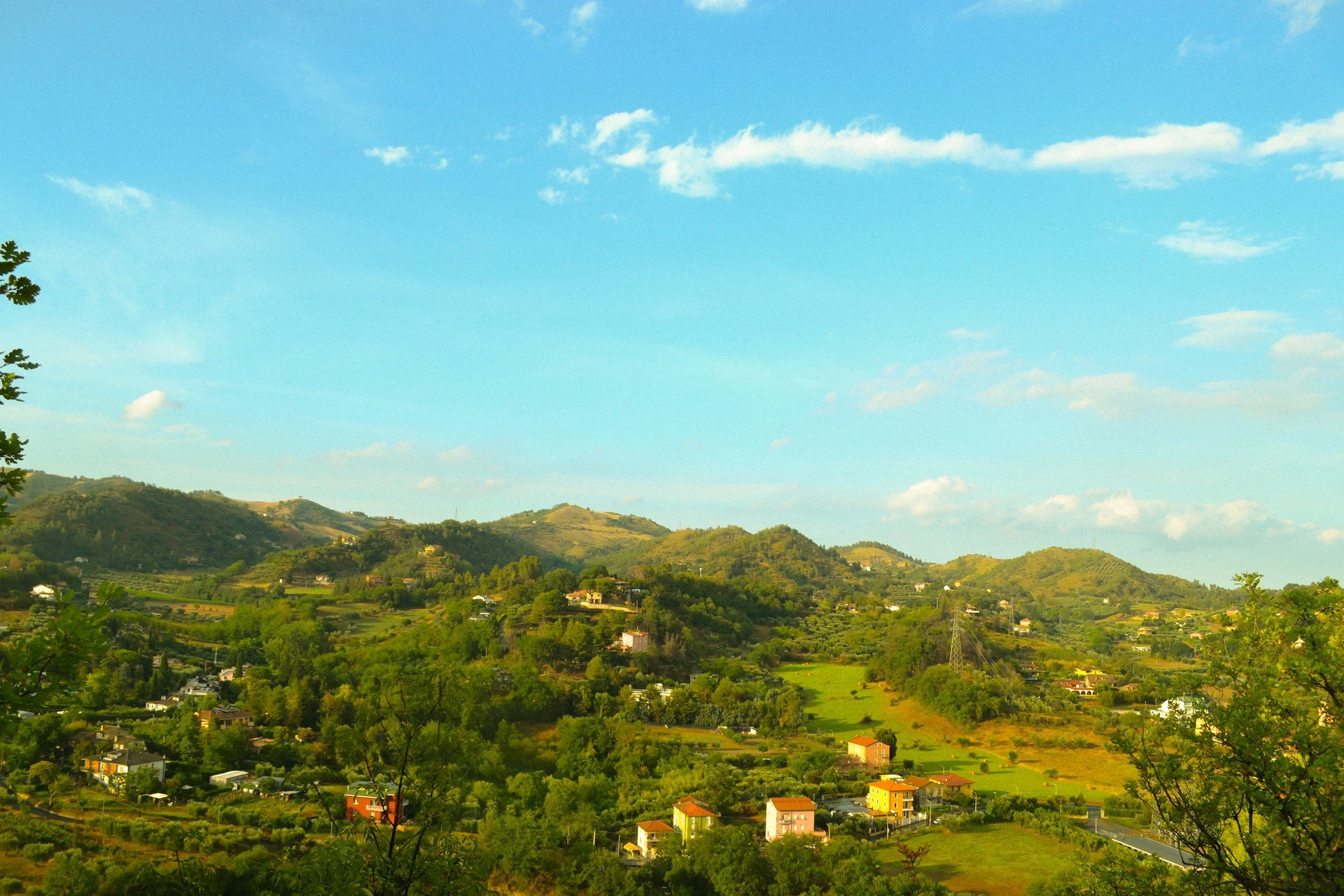
The wit, racontage, gentlemanly values and aspirations of the Universal Man in Baldassare Castiglione’s The Book of the Courtier published in 1528 are rarely from our minds in Urbino where the Renaissance compendium is set. Urbino is just one of the many hilltop towns of architectural delight and utter elegance we shall behold and discover at the end of next summer when we explore the Italian Marches. Of equal charm are Ascoli Piceno, Loreto, Recanati, Fermo and Pesaro where many an unexpected artistic surprise awaits in one of central Italy’s most unspoilt regions.
-
Explore the great renaissance courts of the Montefeltro & della Rovere Dukes of Urbino
Unhurried pace discovering one of central Italy’s loveliest regions
Delightful hilltop & coastal towns including Fermo, Recanati & Pesaro
Visit the pilgrimage town of Loreto
Outstanding Medieval & Renaissance art & architecture
Opportunity to admire the remarkable Pergola gilt bronzes
Comfortable 4* hotels in the historic centres of Ascoli Piceno & Urbino
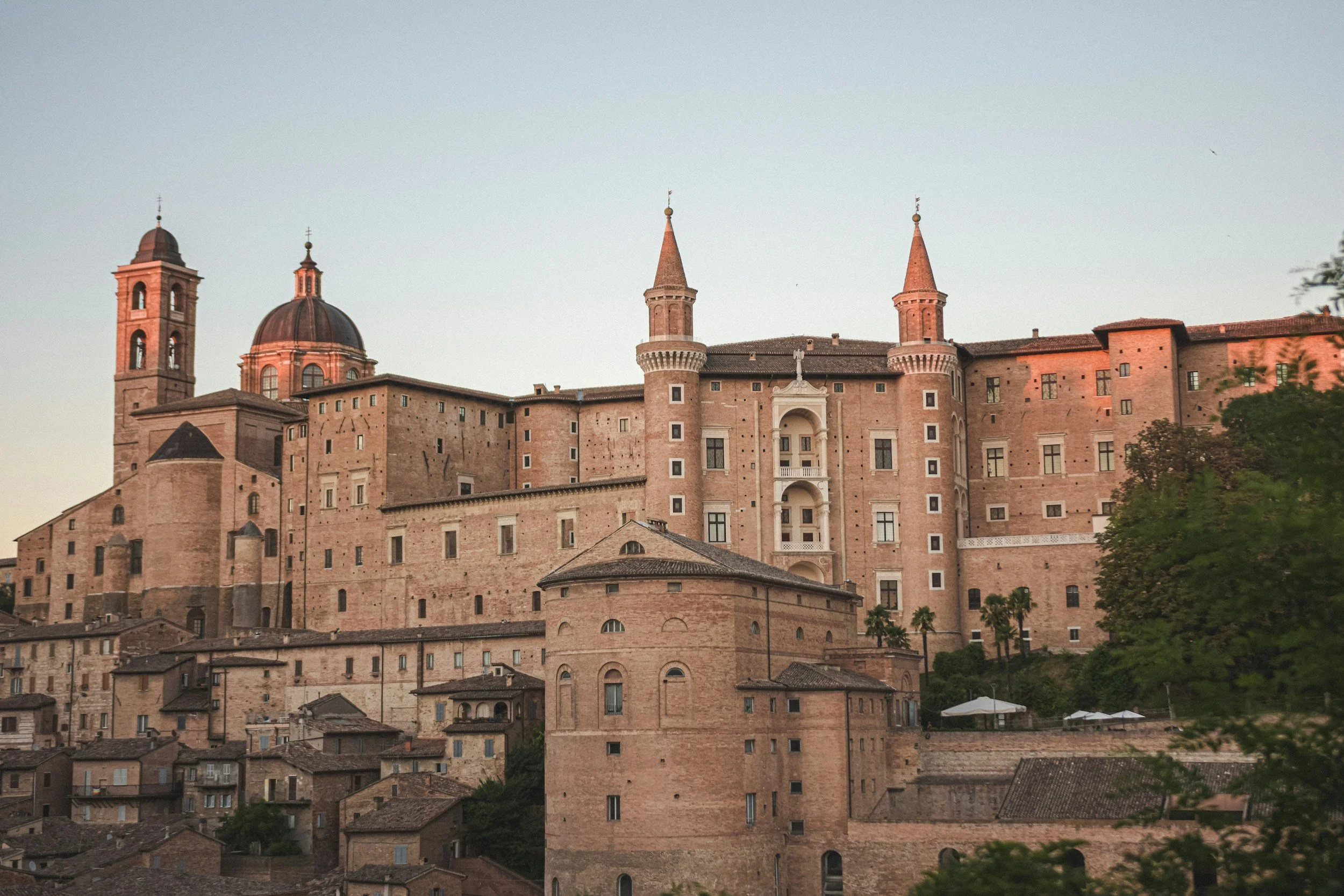
Published in 1528, Baldassare Castiglione’s The Book of the Courtier is an idealized conversation and a compendium of Renaissance social values, gentlemanly qualities and the aspirations of a courtier as a Universal Man. The book is set in Urbino, the hilltop town which in medieval and renaissance times was entwined in the affairs of the Montefeltro family who were created Dukes of Urbino, and their successors, the della Rovere. The greatest of these was Federico da Montefeltro who ruled from 1444 to 1482, initiating a period of great cultural splendour. Nowhere else in Italy can one sense the extraordinary fever for all things new which gripped these two princely families and its famous Ducal Palace.
Equally charming is the elegant town of Ascoli Piceno. Connected to Rome by the Via Salaria, Ascoli became a Roman colonia under the Emperor Augustus though it later came under the constant suzerainty of the Lombards, Franks, rival local dynasties and inevitably the papacy. Beyond Urbino and Ascoli, some of Italy loveliest rural landscapes are dotted with towns large and small, most with something of interest to see but some with unexpected beauties, if you know where to look. For example, Pesaro’s museum has one of Giovanni Bellini’s greatest masterpieces, Rimini’s Tempio Malatestiano is one the great renaissance masterpieces of Alberti’s and the remarkable gilt bronzes at Pergola are the only equestrian bronze group to survive from Ancient Roman times. To the south, Fermo is a charming, handsome town with an amazing relic of English history within its duomo, whilst Loreto is a great centre of pilgrimage, almost as important as Assisi. Recanati has the most surprising picture gallery with the work of the itinerant painter Lorenzo Lotto.
All of these places (bar Rimini), lie in Le Marche, from the German mark, which refers to a frontier or boundary area. Often described as a patchwork of hills, farms and woods it has some of the best mountain scenery in central Italy, hidden treasures of art and architecture with particularly good food and wine. We shall spend three nights in Ascoli Piceno at the 4* Palazzo Guiderocchi and three nights in Urbino at the 4* Hotel San Domenico, both hotels ideally located in their respective historic centres where the wit and racontage of the courtier will never be far from our thoughts.
-
Day 1: Monday 20 September – We fly from London Heathrow arriving at Rome mid-afternoon. We then travel north-eastwards along the Via Salaria to Le Marche, AscoliPiceno and our hotel, the 4*Palazzo Guiderocchi. There will be a group dinner in a local restaurant - wine, water and coffee are included with all group lunches and dinners.
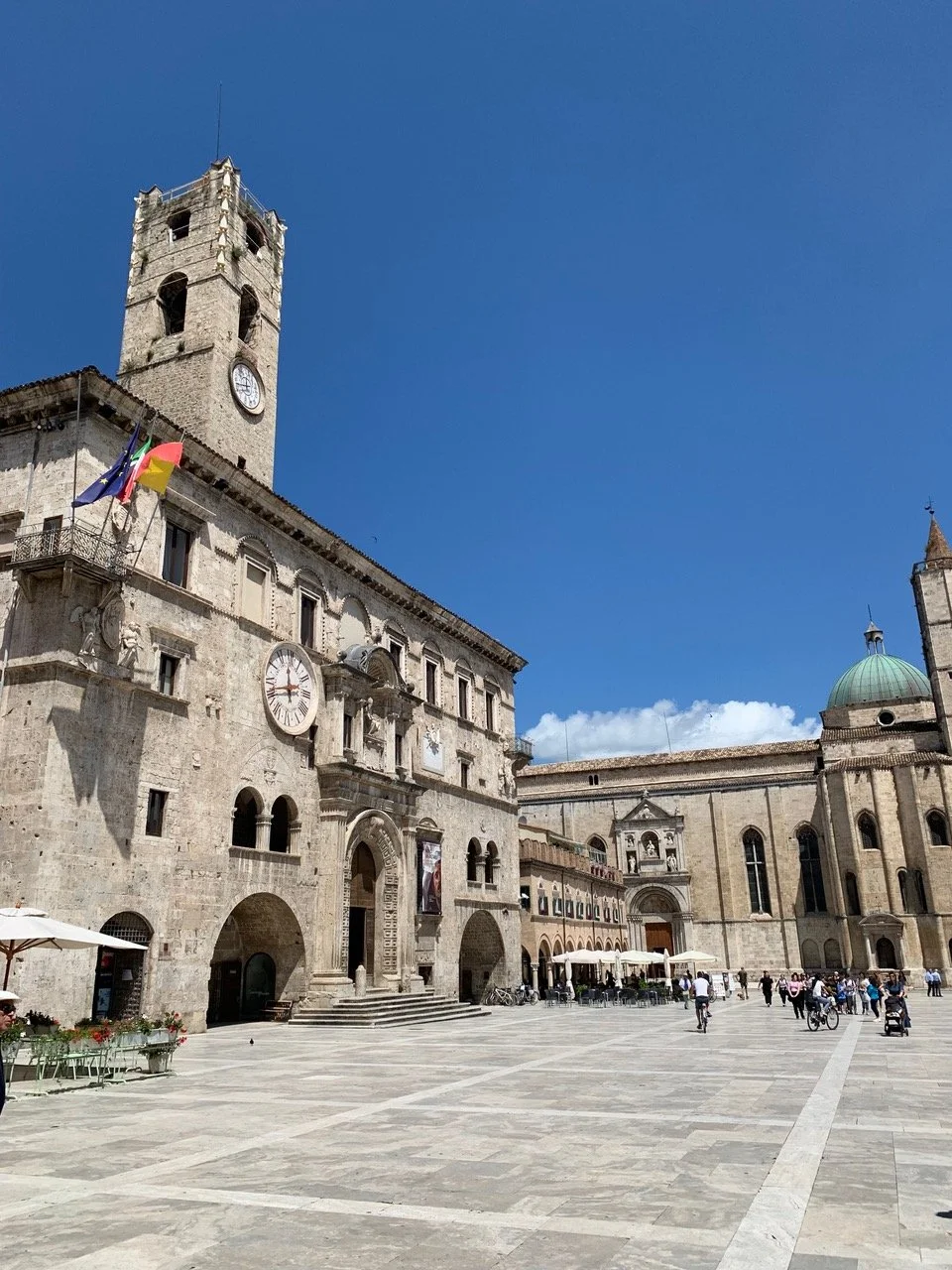
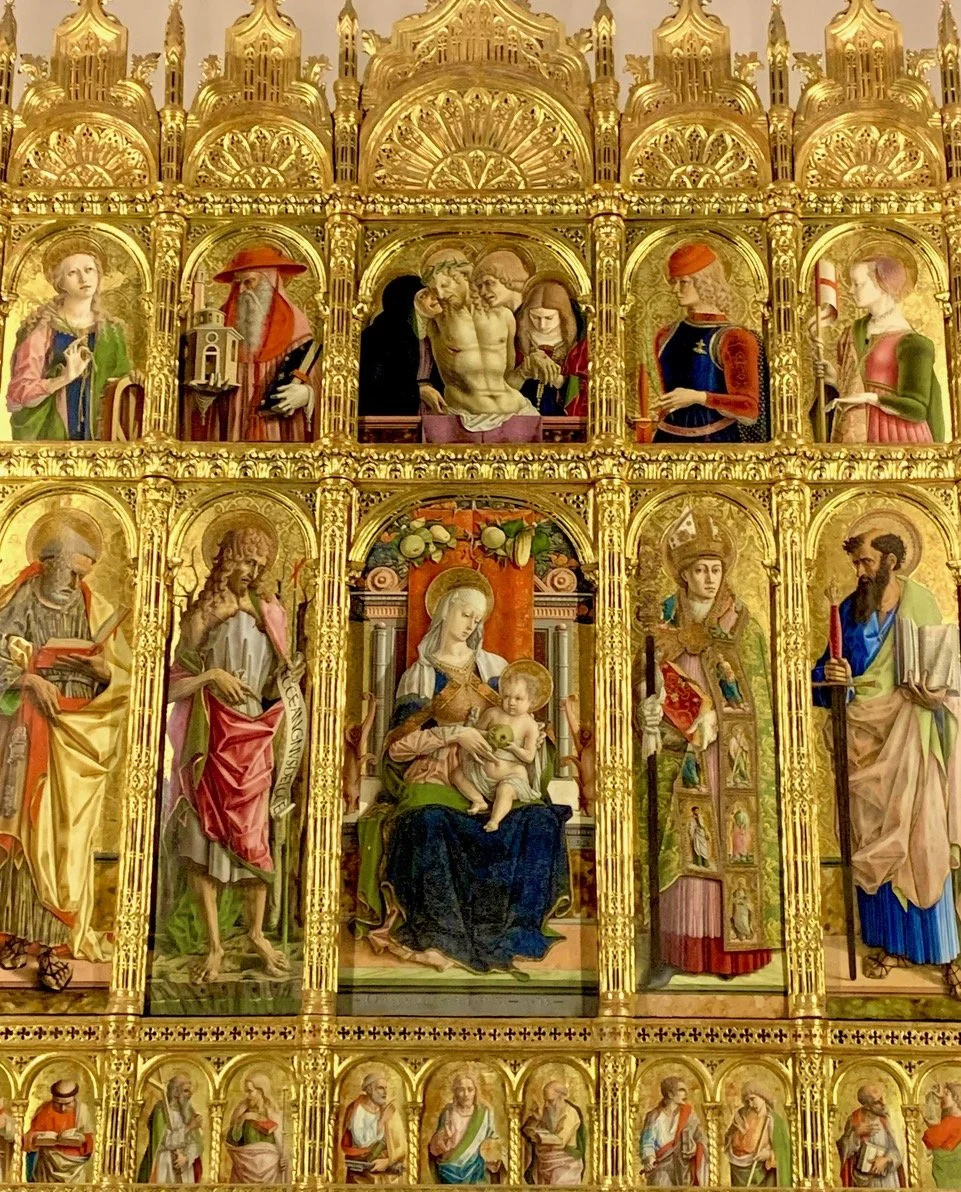
Day 2: Tuesday 21 September – One of Italy’s loveliest cities, Ascoli Piceno is sublimely beautiful and our gentle morning’s stroll will focus on two stunning piazzas and their surrounding buildings. In Piazza Arringo the Duomo is a mostly fifteenth century church with splendid works of art including Carlo Crivelli’s most famous polyptych altarpiece. The Palazzo dell’Arengo houses the city’s principal museum which we shall also visit. Piazza del Popolo is surrounded by many harmonious civic and secular buildings, built in travertine, including the soaring San Francesco - one of the many fine Romanesque and Gothic churches we shall come across. After lunch (not included) we travel the short distance east of Ascoli to Borgo Storico Seghetti Panichi, a restored medieval hamlet with a private eighteenth-century villa. The owners will guide us around the nineteenth century botanical garden planned in the late nineteenth by a German botanist and landscape architect which surrounds the property. We return to Ascoli, the evening will be free.
Day 3: Wednesday 22 September – we travel to the charming town of Fermo which since pre-Roman times has been an important urban centre. Handsome renaissance buildings surround Piazza del Popolo including the Palazzo dei Priori which contains a Library and a small Picture Gallery which we shall visit. Just above the piazza is the Duomo, and though modified in the eighteenth century, this fine medieval building is both spacious and solemn. Its nearby Diocese Museum contains of all things, St Thomas à Becket’s chasuble – a masterpiece of medieval embroidery! After a late group lunch, we return to Ascoli where the remainder of the afternoon and evening will be free.
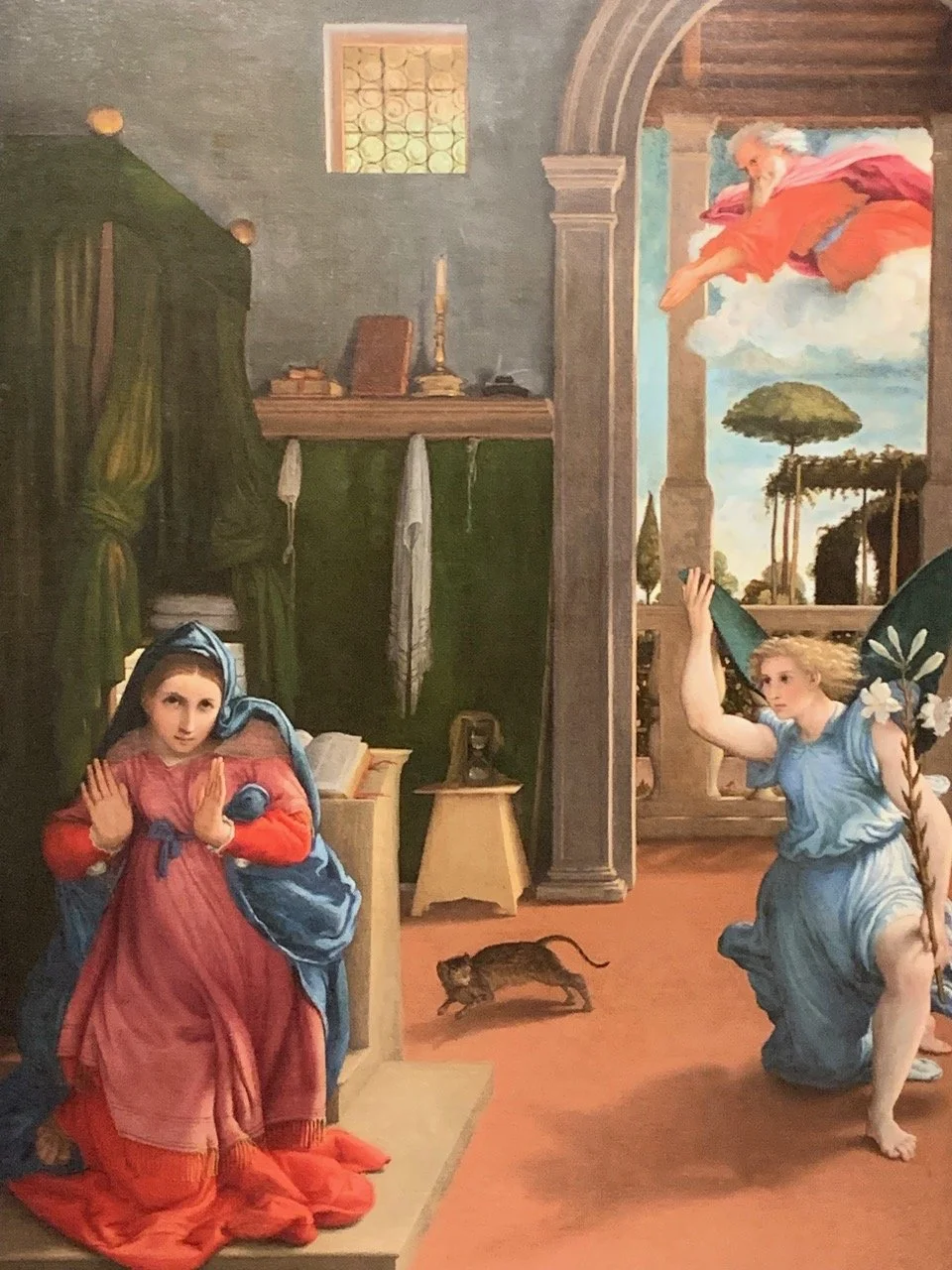
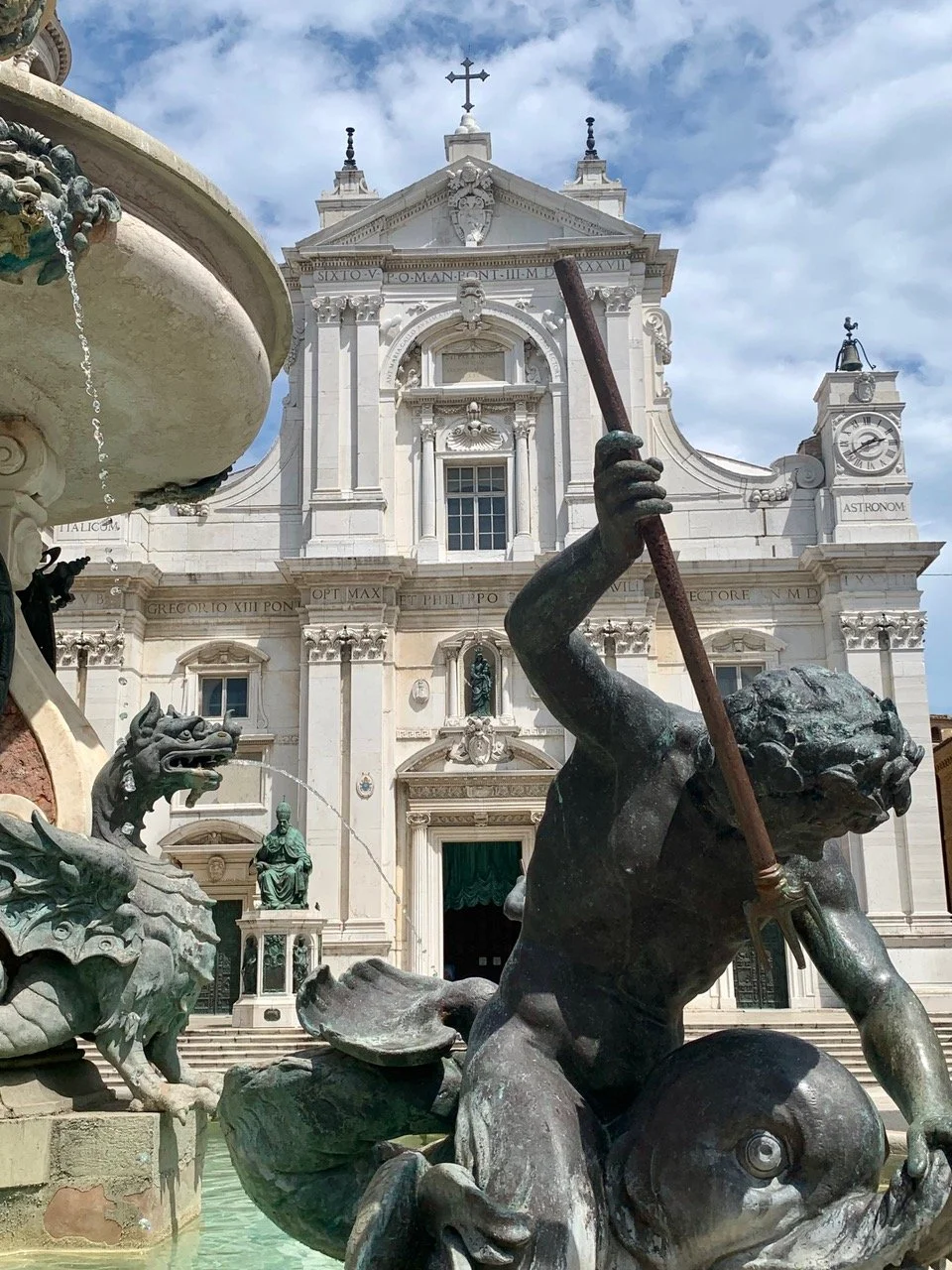
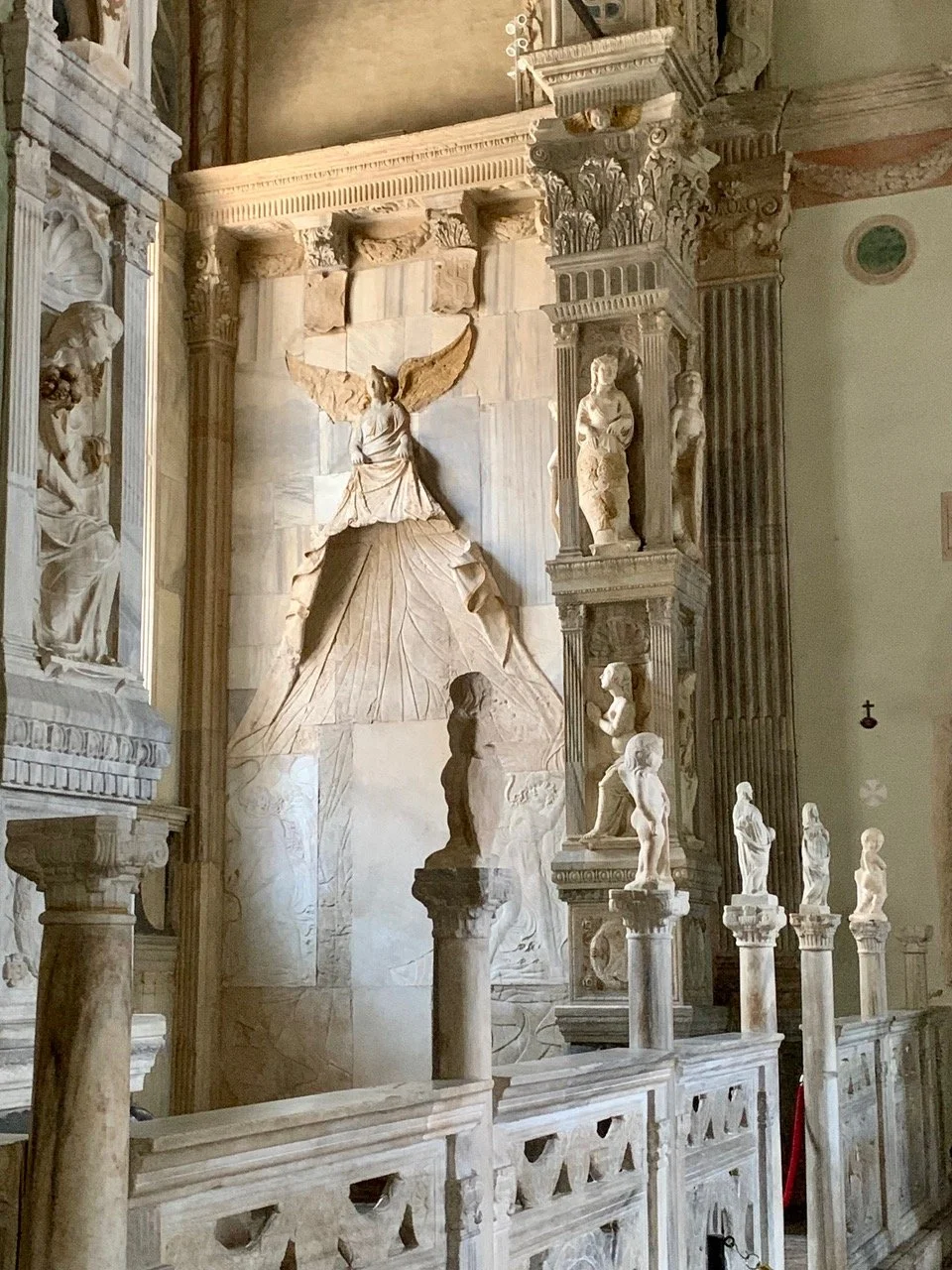
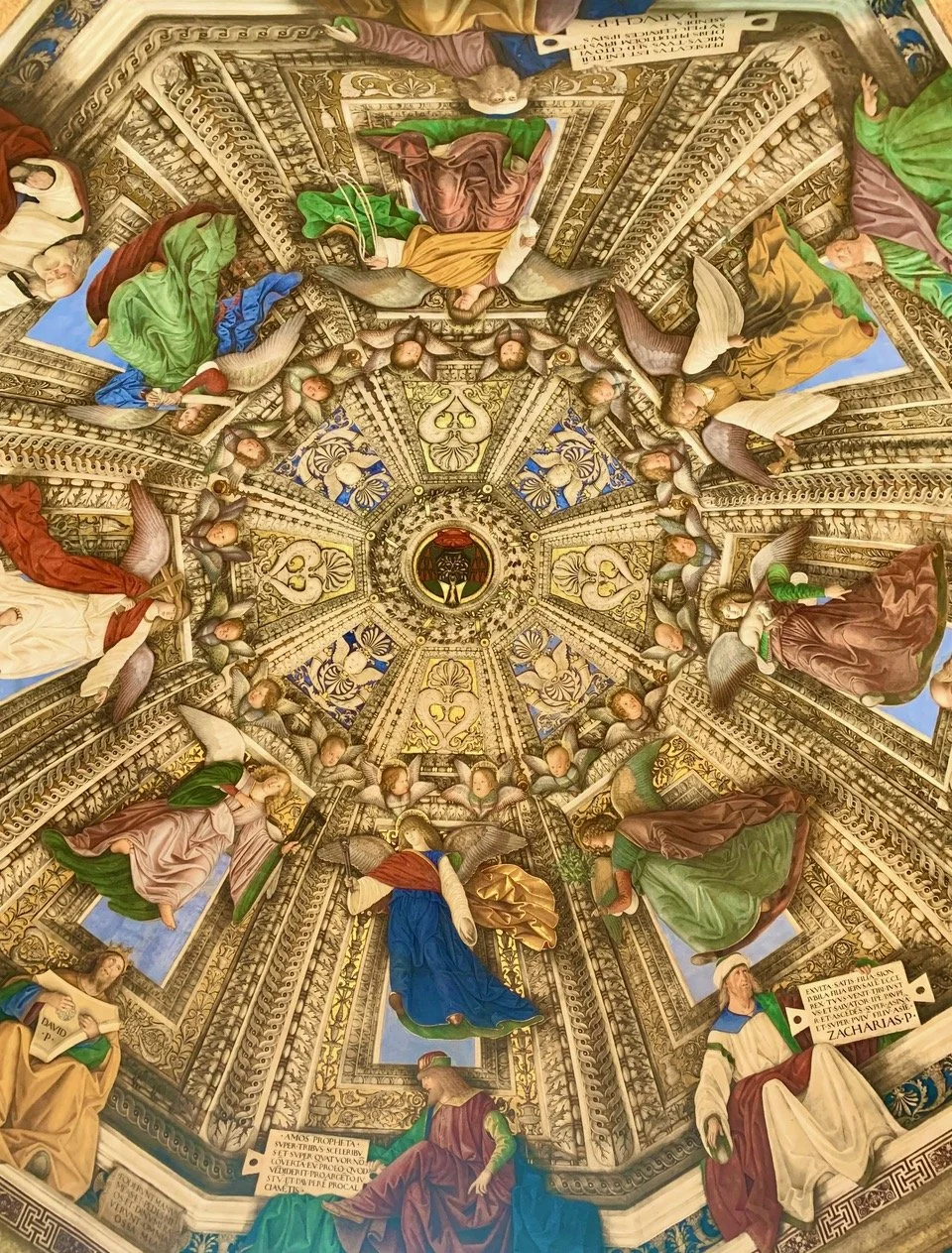
Day 4: Thursday 23 September – Leaving Ascoli, we travel northwards to Recanati. Gentle hills surround this enclave where the web of narrow streets is infused with the spirit of its most famous son, the romantic poet Giacomo Leopardi. Our visit will focus on Villa Colloredo-Mels, home to a substantial collection of paintings by Lorenzo Lotto. We continue to Loreto for lunch (not included) and in the afternoon we cannot but engage with the remarkable story of the ‘transportation’ of the House of the Virgin, the Santa Casa, from Nazareth to Loreto. A major place of Catholic pilgrimage, the huge Sanctuary Church has within it an enclosing marble screen designed by Bramante, surrounding the Santa Casa - the screen is one of the great works of sixteenth century art in Italy. The nearby Apostolic Palace has a good Picture Gallery with works by Lotto, Parmigianino and Tiepolo. We continue northwards to Urbino and the 4* Hotel San Domenico for three nights. Later in the evening we have a group dinner in a nearby restaurant.
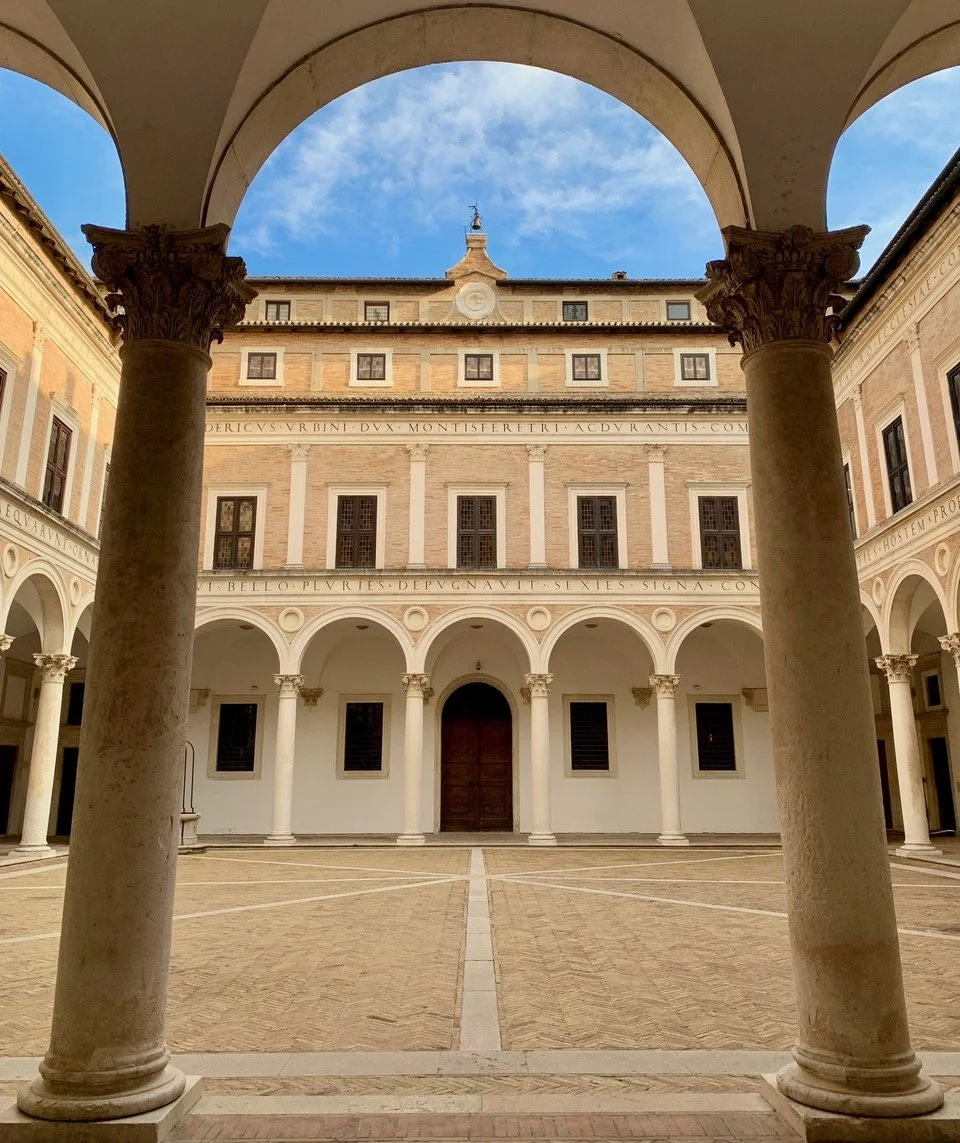
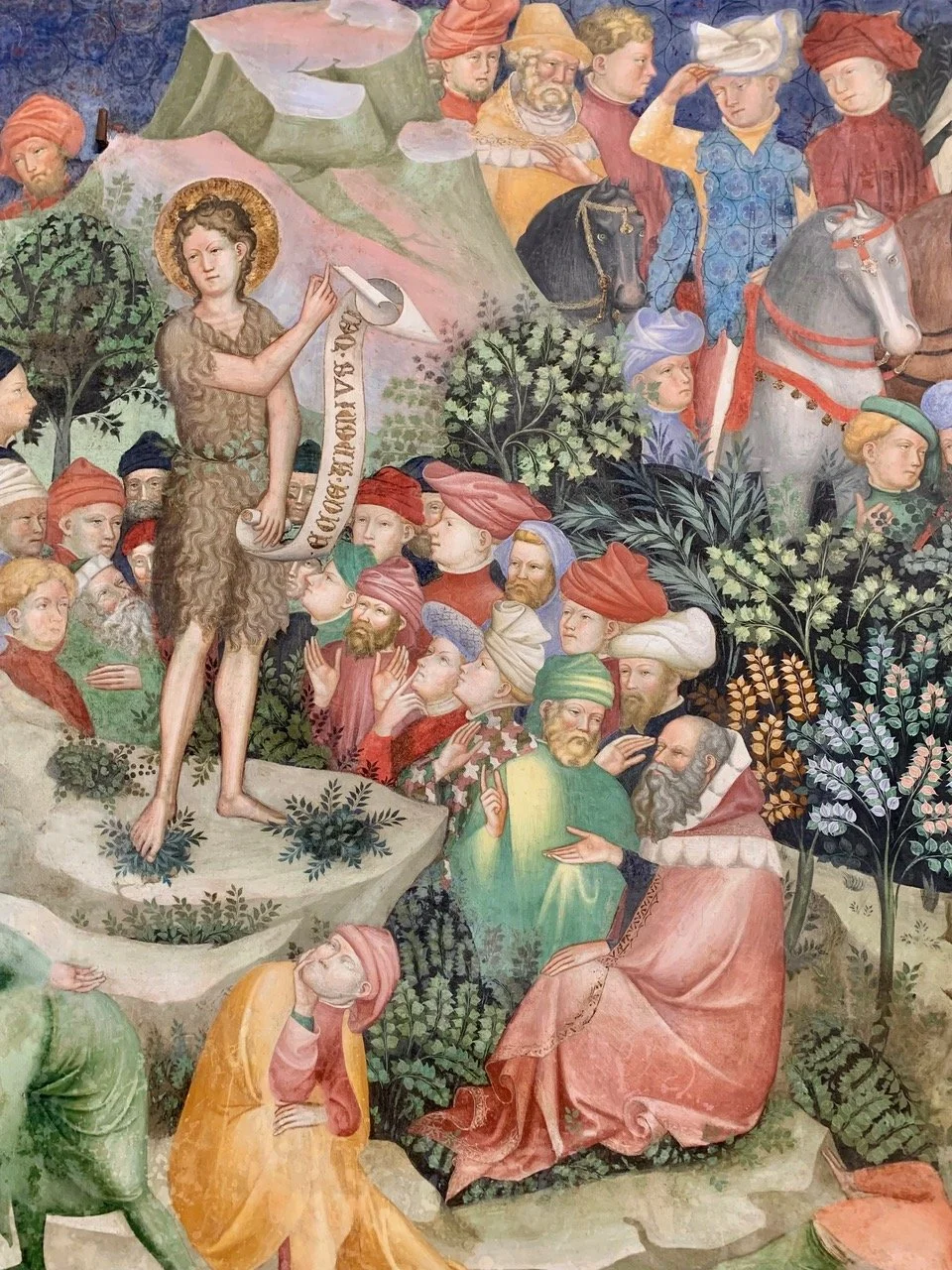
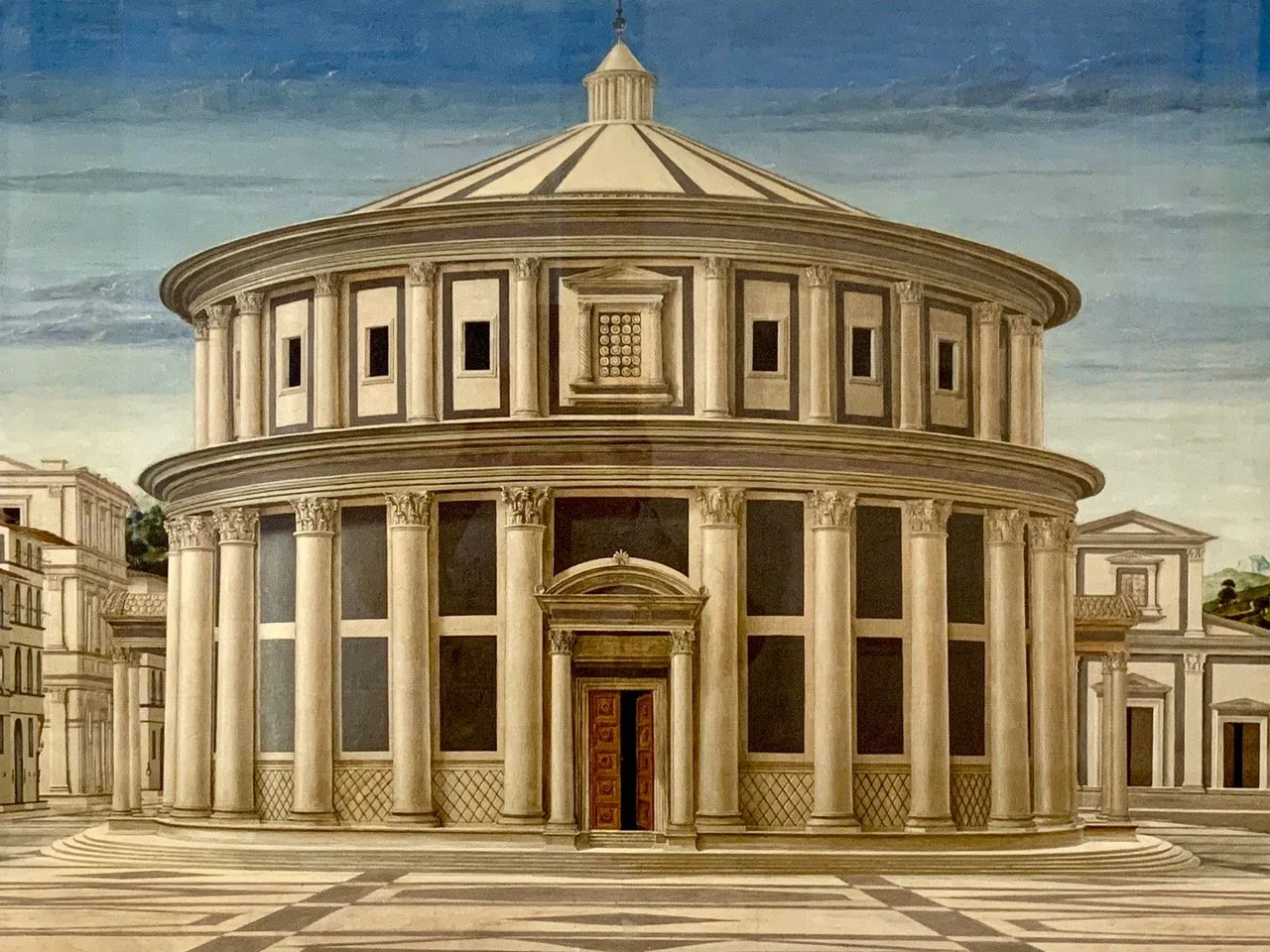
Day 5: Friday 24 September – Today is spent on foot in magical Urbino, beginning in the principal piazza with a visit to the Duomo, a handsome Neo-classical church rebuilt by Giuseppe Valadier following the 1789 earthquake. After a visit to the nearby Diocese Museum and a coffee break, we visit the adjacent Palazzo Ducale, Federico da Montefeltro’s “city in the form of a palace” within which the recently refurbished National Gallery of The Marches is housed on the piano nobile. Great works of art include paintings by Piero della Francesco, Raphael and Titian, Laurana’s Ideal City, and the Duke’s famed wood inlaid studiolo. After lunch, not included, we stroll through Urbino to visit two delightful Oratories dedicated to St Joseph and St John, the latter of which features a lively fifteenth century fresco cycle by the Salimbeni brothers. The remainder of the afternoon and evening will be free for private explorations.
Day 6: Saturday 25 September – This morning we travel to the nearby seaside town of Pesaro to visit its civic museum and view one of Giovanni Bellini’s greatest masterpieces, the majestic altarpiece of the Coronation of the Virgin. Following lunch, we return to Urbina via the small town of Pergola. We shall visit the local museum to view its gilt bronzes, the only Roman gilt bronze equestrian group to come down to us. This remarkable survival possibly dates to the first century BC. Our final group dinner is held in an excellent local restaurant.
Day 7: Sunday 26 September – On our final day, we travel to the seaside resort of Rimini. Founded by the Romans, Ariminum was a key fortified link between north and south. Our morning visit focuses on Leon Battista Alberti’s remarkable Tempio Malatestiano, commissioned in 1450 by the infamous tyrant, Sigismondo Malatesta. After a final group lunch in the town, we continue north-westwards for the evening return flight from Bologna to London Heathrow.
-
Price £3470per person (2 sharing) Without Flights £3270 per person (2 sharing) Deposit £475 per person
Single Supplement £390 (Double for Sole Use)
Hotels
3 nights inc breakfast 4* Palazzo Guiderocchi, Ascoli Piceno
3 nights inc breakfast 4* San Domenico, Urbino
Flights British Airways
BA554 Depart London Heathrow (Terminal 5) 1215 arrive Rome 1550
BA543 Depart Bologna 2005 arrive London Heathrow (Terminal 5) 2120
Price includes 3 dinners & 2 lunches with wine, water & coffee, all local transfers, entry fees & gratuities, city tax, services of Tom Duncan & James Hill
Not included Travel to/from Heathrow, 3 dinners & 4 lunches
Please note our tours generally involve a significant amount of standing and walking, sometimes across uneven ground, or over cobbled streets, or up and down steps and inclines. We do not have an upper age limit for participants, but we require you to have a level of fitness which does not affect other participants' enjoyment of the tour. Please also note that many palaces, gardens, villas, museums and galleries have limited seating and perhaps do not have lifts. You should be able to walk at a reasonable pace and/or stand for at least twenty minutes without aid or requiring a rest. If you are in any doubt, please do contact us for advice on the tour’s suitability for you.